
Morris Cost Seg Consultants
Self-Storage Properties
Cost segregation for self-storage properties is an effective tax strategy that helps owners accelerate depreciation and improve cash flow.
Morris Cost Seg Consultants: Specialties
Unlock Hidden Value In Your Self-Storage Properties
Self-storage property owners and investors face unique challenges in today’s competitive market. Between rising construction costs, increasing property taxes, and the constant need for facility upgrades, maintaining profitability requires strategic financial planning. That is where cost segregation from Morris Cost Seg Consultants becomes a game-changing tax strategy for self-storage facilities.
Cost segregation is an IRS-approved tax planning tool that allows self-storage property owners to accelerate depreciation deductions by reclassifying building components from 39-year property to shorter recovery periods of 5, 7, or 15 years. This strategic reclassification creates substantial immediate tax savings, improving cash flow and providing working capital that can be reinvested into facility expansion, technology upgrades, or competitive improvements.
Understanding Cost Segregation for Self-Storage Properties
Cost segregation is an IRS-approved tax planning tool that allows self-storage property owners to accelerate depreciation deductions by reclassifying building components from 39-year property to shorter recovery periods of 5, 7, or 15 years. This strategic reclassification creates substantial immediate tax savings, improving cash flow and providing working capital that can be reinvested into facility expansion, technology upgrades, or competitive improvements.
Key Components Reclassified in Self-Storage Cost Segregation Studies
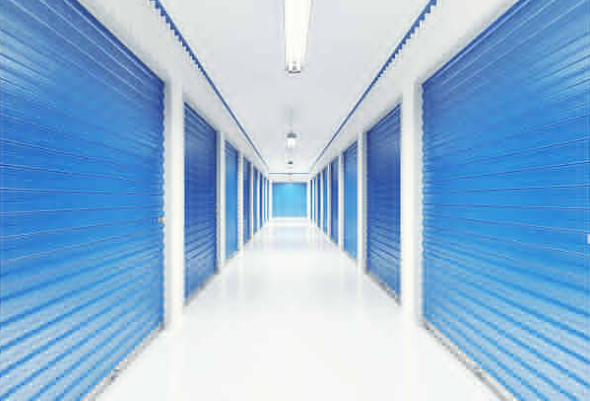
Self-storage facilities contain numerous elements that qualify for accelerated depreciation. Understanding these components helps property owners recognize the substantial tax deferral opportunities available:
Site Improvement and Infrastructure
Asphalt and Paving:
The extensive network of paved drive paths that allow customers to access their storage units typically qualifies as 15-year land improvement property rather than 39-year real property. For a typical self-storage facility with 50,000 square feet of asphalt paving at $4 per square foot, this represents $200,000 in costs that can be depreciated over 15 years instead of 39 years.
Concrete Work:
Sidewalks, curbing, and concrete aprons surrounding storage units qualify for accelerated depreciation. These improvements facilitate customer access but are not considered permanent structural components of the buildings themselves.
Drainage Systems:
Storm water management systems, catch basins, drainage pipes, and retention ponds are critical infrastructure that typically qualifies for 15-year depreciation. These systems prevent water damage and maintain safe access to storage units.
Security and Access Control Systems
Self-storage facilities rely heavily on security infrastructure to protect customer belongings and maintain competitive advantage. These systems offer excellent opportunities for cost segregation:
Security Systems:
Digital surveillance cameras, motion detectors, alarm systems, and monitoring equipment typically qualify as 5-year personal property. For a mid-sized facility investing $75,000 in comprehensive security infrastructure, the difference between 5-year and 39-year depreciation is substantial.
Gates and Fencing:
Electronic access gates, perimeter fencing, and automated entry systems generally qualify for 7 to 15-year depreciation. A facility spending $100,000 on security fencing and automated gates can accelerate depreciation significantly through proper classification.
Site Lighting:
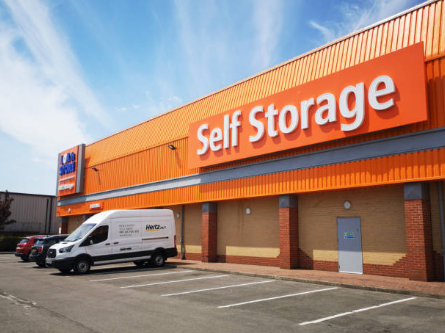
Exterior lighting that illuminates drive aisles, parking areas, and building perimeters typically qualifies as 15-year property. Security lighting systems can represent $50,000 to $150,000 in reclassifiable costs for larger facilities.
Building Components and Systems
Site Lighting:
Exterior lighting that illuminates drive aisles, parking areas, and building perimeters typically qualifies as 15-year property. Security lighting systems can represent $50,000 to $150,000 in reclassifiable costs for larger facilities.
Metal Buildings:
While the primary structure may remain 39-year property, many components within pre-engineered metal buildings used for self-storage can be segregated. This includes specialized HVAC systems for climate-controlled units, electrical distribution systems, and interior finishing components.
WHY CLIENTS CHOOSE MORRIS COST SEG CONSULTANTS
Engineering-Based Cost Segregation Studies.
Trusted Experience. Proven Results.
Roadmap planning
What sets Morris Cost Seg Consultants apart in the self-storage industry is our deep understanding of these unique properties. We have extensive experience analyzing metal buildings, security infrastructure, and the specialized systems that make self-storage facilities operational. We do not simply apply generic percentages—we conduct thorough site inspections, review construction documents, and interview contractors to ensure every qualifying dollar is identified.
Our cost segregation studies comply fully with IRS guidelines, including the detailed requirements outlined in the Audit Techniques Guide for Cost Segregation. Each study includes comprehensive documentation, photographs, and engineering analysis that will withstand IRS scrutiny.

Jim Morris
President | Senior Project Manager
Morris Cost Seg Consultants, LLC
Transform Tax Savings Into Competitive Advantage
Self-storage properties represent one of the best asset classes for cost segregation due to their high percentage of qualifying components. The combination of extensive site improvements, sophisticated security systems, metal buildings, and specialized infrastructure means that 25-35% of total costs can typically be reclassified to shorter depreciation schedules.
Morris Cost Seg Consultants has helped self-storage property owners across the country unlock millions in tax savings that have been reinvested into facility improvements, portfolio growth, and competitive positioning. Our engineering-based approach, industry expertise, and commitment to IRS compliance ensure you receive maximum savings with complete peace of mind.
The question is not whether your self-storage property qualifies for cost segregation—it almost certainly does. The question is how much longer you want to wait before capturing these tax benefits. Every year you delay represents lost time value of money and foregone opportunities to reinvest savings into your business.
Contact Morris Cost Seg Consultants today for a complimentary analysis of your self-storage property. Discover exactly how much you could save and what those tax savings could mean for your facility’s growth and your investment returns. Let us show you how strategic tax planning through cost segregation can become your competitive advantage in the self-storage industry.
Get In Touch
If you would like to discuss whether a cost segregation study is appropriate for your property, we welcome the opportunity to speak with you.
Contact Morris Cost Seg Consultants to request a consultation or preliminary review.

Follow Us