
Morris Cost Seg Consultants
Retail Buildings
Cost segregation for retail buildings is a powerful tax strategy that allows property owners to accelerate depreciation and improve cash flow.
Morris Cost Seg Consultants: Specialties
Unlock Hidden Tax Savings In Your Retail Buildings
Retail property owners and developers face unique financial pressures in today’s competitive marketplace. Between rising operating costs, evolving consumer expectations, and the need for constant reinvestment in your physical spaces, maximizing cash flow has never been more critical.
That’s where cost segregation from Morris Cost Seg Consultants becomes a game-changing tax strategy for retail buildings of all types—from standalone stores and strip malls to sophisticated mixed-use retail developments.
Understanding Cost Segregation for Retail Buildings
Cost segregation is an IRS-approved tax planning strategy that accelerates depreciation deductions by identifying and reclassifying building components into shorter depreciation categories. Instead of depreciating your entire retail property over 39 years (the standard timeline for commercial real estate), cost segregation studies identify specific assets that qualify for 5-year, 7-year, or 15-year depreciation schedules.
For retail buildings, this process is particularly valuable because of the extensive aesthetic and functional improvements that define modern retail spaces. From custom lighting systems that showcase merchandise to specialized flooring designed for heavy foot traffic, retail properties contain numerous assets that qualify for accelerated depreciation—yet most owners leave these tax savings unclaimed.
Morris Cost Seg Consultants specializes in comprehensive cost segregation studies tailored specifically for retail environments. Our experienced professionals understand the unique construction elements and improvement categories that characterize retail buildings, ensuring you capture every eligible dollar of tax deferral.
Key Retail Buildings Assets Targeted for Accelerated Depreciation
Display and Specialty Lighting Systems
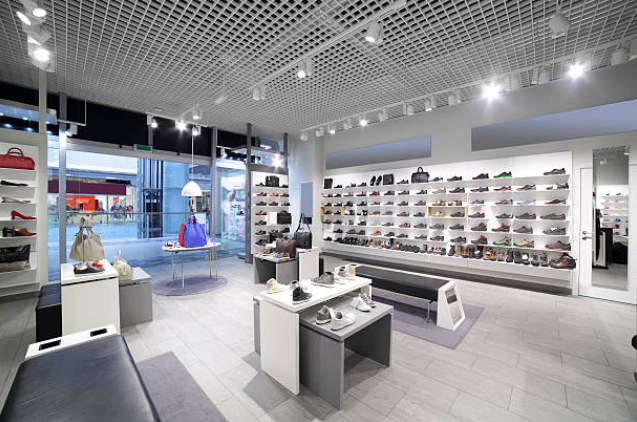
Lighting represents one of the most significant opportunities for accelerated depreciation in retail buildings. Beyond basic illumination, retail spaces feature sophisticated lighting designs that enhance product displays, create ambiance, and guide customer flow throughout the store.
Our cost segregation studies identify and reclassify various lighting components including track lighting systems, accent lighting for merchandise displays, LED strip lighting, decorative fixtures, and specialty lighting for fitting rooms or feature walls. These systems typically qualify for 5-year or 7-year depreciation rather than the standard 39-year building depreciation schedule.
For a 15,000 square foot retail store, lighting systems alone can represent $150,000 to $300,000 in reclassified assets, generating substantial first-year tax savings through accelerated depreciation and bonus depreciation provisions.
Specialized Flooring Solutions
Retail flooring goes far beyond basic concrete slabs. Modern retail spaces incorporate diverse flooring materials chosen for durability, aesthetics, and customer experience. Cost segregation studies can reclassify various flooring elements including decorative tile work, hardwood display areas, carpet in fitting rooms and customer service zones, polished concrete with decorative finishes, and vinyl plank flooring in specific departments.
These flooring improvements often represent significant construction costs but qualify for shorter depreciation periods when properly classified. The key is demonstrating that these flooring choices serve specific functional or aesthetic purposes beyond basic building structure.

Exterior and Interior Signage
Signage represents a clear-cut opportunity for accelerated depreciation in retail cost segregation studies. Exterior monument signs, illuminated storefront signage, interior wayfinding systems, departmental identification signs, and window graphics all typically qualify for 7-year depreciation.
For retail centers and strip malls, tenant signage packages can represent substantial reclassifiable assets. A shopping center with ten retail tenants might have $100,000 to $200,000 in signage that moves from 39-year to 7-year depreciation, creating immediate tax benefits for the property owner.
Custom Wall Finishes and Interior Design Elements
The aesthetic appeal of retail spaces drives customer engagement and sales performance. Cost segregation studies identify custom wall treatments including decorative paint finishes, specialty wall coverings, wainscoting and millwork, accent walls with unique materials, and three-dimensional wall features.
These improvements enhance the shopping environment but do not constitute permanent building structure. When properly documented and classified, they qualify for significantly accelerated depreciation timelines.
Paved Parking and Site Improvements
Retail buildings depend on accessible, well-maintained parking facilities. Cost segregation treats various parking lot components as land improvements with 15-year depreciation rather than 39-year building depreciation. This category includes asphalt paving, concrete parking areas, striping and marking, parking lot lighting, landscaping and irrigation systems, and sidewalks and pedestrian pathways.
For a shopping center with 200 parking spaces, site improvements might total $400,000 to $800,000—all eligible for accelerated depreciation through proper cost segregation analysis.
Understanding The Tax Savings Timeline
Cost segregation creates value through two primary mechanisms: acceleration of depreciation deductions and the time value of money. When you move assets from 39-year depreciation to 5-year, 7-year, or 15-year categories, you are not creating additional deductions—you are frontloading them to the early years of property ownership.
This front loading provides several critical advantages. First, you receive substantial tax deductions when you need cash flow most—immediately after a significant capital investment. Second, you benefit from the time value of money by using tax savings now rather than spreading them over decades. Third, you improve key financial metrics including cash-on-cash returns and internal rate of return.
Current law allows qualifying assets placed in service in 2024 to benefit from 60% first-year bonus depreciation, while assets placed in service in 2025 qualify for 100% bonus depreciation. Even beyond bonus depreciation, cost segregation delivers substantial benefits through accelerated regular depreciation schedules, improving cash flow and reducing taxable income.
What Retail Businesses Can Do With Tax Savings
The immediate cash flow improvement from cost segregation creates opportunities for strategic reinvestment and growth. Smart retail owners and developers deploy these tax savings in ways that drive additional value:
Enhanced Marketing and Customer Acquisition:
Deploy savings into digital marketing campaigns, social media advertising, and customer loyalty programs that drive foot traffic and sales growth. For a retail center, an additional $200,000 in available cash might fund a year-long comprehensive marketing strategy.
Technology Infrastructure Upgrades:
Invest in point-of-sale systems, inventory management software, customer relationship management tools, and e-commerce integration. Modern retail requires sophisticated technology, and cost segregation savings provide capital for these essential systems without external financing.
Additional Location Expansion:
Use tax savings as down payments or build-out capital for new locations. Many successful retailers leverage cost segregation across multiple properties, using the tax benefits from existing locations to fund expansion into new markets.
Tenant Improvement Allowances:
For retail landlords, tax savings can fund more generous tenant improvement packages, making spaces more attractive to desirable tenants and reducing vacancy periods. A shopping center owner might use $300,000 in tax savings to offer competitive TI allowances that secure national credit tenants.
Inventory Investment:
Retailers can redirect tax savings into inventory purchases during peak seasons or to take advantage of bulk purchasing opportunities, improving margins and product selection.
Employee Training and Development:
Invest in staff training programs, improved compensation packages, and employee retention initiatives. Better-trained, more satisfied employees drive superior customer experiences and sales performance.
Property Maintenance Reserves:
Build healthy cash reserves for ongoing property maintenance, ensuring retail spaces remain attractive and competitive without scrambling for capital when repairs are needed.
Debt Reduction:
Apply tax savings to pay down acquisition loans or construction debt, reducing interest expenses and improving overall property returns while building equity faster.
WHY CLIENTS CHOOSE MORRIS COST SEG CONSULTANTS
Engineering-Based Cost Segregation Studies.
Trusted Experience. Proven Results.
Our Advantage
Morris Cost Seg Consultants brings specialized expertise to retail building cost segregation studies. We include engineers, construction professionals, and tax specialists who understand the unique characteristics of retail construction and the specific IRS requirements for proper asset classification.
We conduct detailed site inspections of your retail properties, examining construction documents, architectural plans, and as-built conditions. Our engineering-based approach ensures studies meet IRS standards and withstand audit scrutiny. We document every asset classification with photographs, construction cost data, and detailed engineering analysis.
Our retail-specific expertise means we recognize opportunities that general practitioners might miss. We understand how retail construction differs from office buildings or industrial properties, and we know exactly which components qualify for accelerated depreciation under IRS guidelines.

Jim Morris
President | Senior Project Manager
Morris Cost Seg Consultants, LLC
Take Action on Your Retail Property Tax Strategy
Every month you delay implementing cost segregation represents lost tax savings and reduced cash flow. The most successful retail property owners and developers incorporate cost segregation into their acquisition and development strategies from day one, maximizing the financial benefits of this powerful tax planning tool.
Morris Cost Seg Consultants has helped hundreds of retail property owners unlock millions in tax savings through detailed, defensible cost segregation studies. Our proven methodology, retail-specific expertise, and commitment to IRS compliance ensure you receive maximum tax benefits with complete confidence.
Whether you own a single retail storefront, manage a portfolio of shopping centers, or develop mixed-use retail projects, cost segregation should be a cornerstone of your tax strategy. The immediate cash flow improvements and enhanced investment returns make this one of the most valuable tax planning strategies available to retail property investors.
Contact Morris Cost Seg Consultants today for a complimentary analysis of your retail property’s cost segregation potential. Discover how much additional cash flow you could be generating through strategic tax planning designed specifically for retail buildings. Your competitors are already using these strategies—is it time you captured your share of these valuable tax benefits?
Get In Touch
If you would like to discuss whether a cost segregation study is appropriate for your property, we welcome the opportunity to speak with you.
Contact Morris Cost Seg Consultants to request a consultation or preliminary review.

Follow Us